Day 3 · the pump schedule
Set it once, then let it run without you
The last afternoon on a well is mostly wiring. We fit the pump, the pressure switch and the control box, and then we try very hard to make sure the owner never has to think about any of it again.
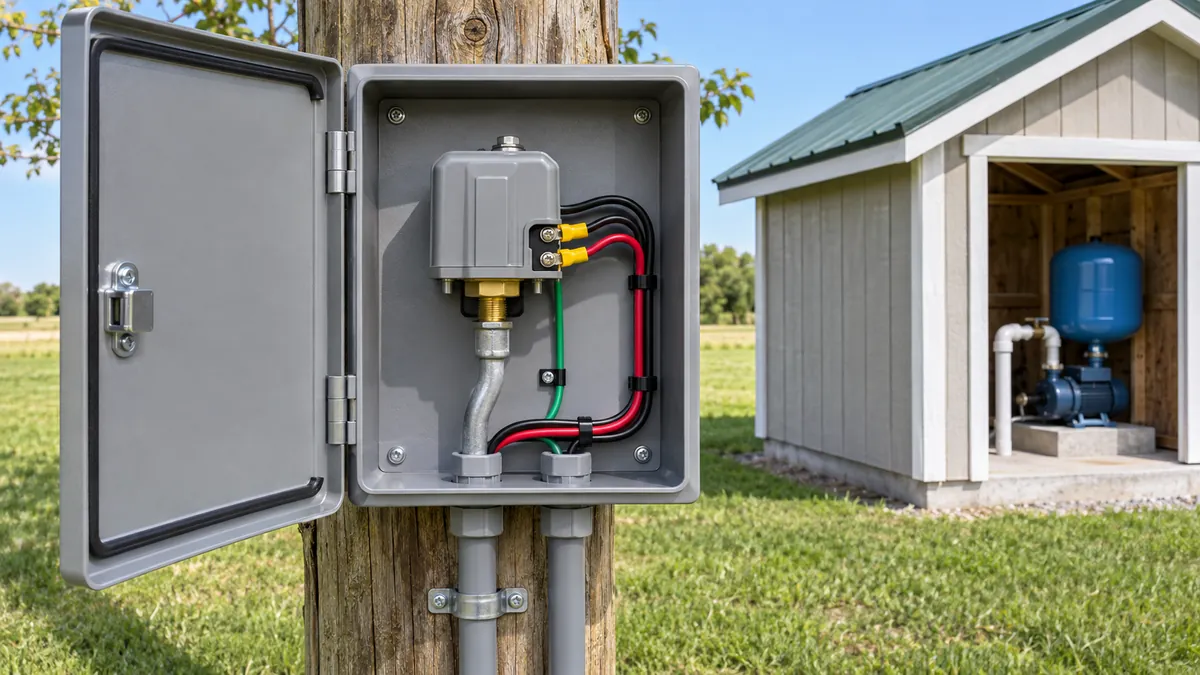
Machines that decide for you
A pressure switch is a modest device. When the pressure in the line drops below a certain point, it turns the pump on; when the pressure climbs back up, it turns the pump off. Nobody stands by the tap deciding. The decision was made once, when the switch was set, and from then on it simply happens. Some systems add a timer so that heavy jobs, such as filling a cistern, run at night when nobody needs the line for anything else.
That is the quiet genius of a good setup. It takes a choice that would otherwise come up fifty times a day and settles it in advance. The owner's attention is left free for the things that genuinely need deciding.
How many small decisions a day asks for
A household runs on hundreds of tiny choices. Where did I put the car keys. Have I taken the morning pills. Did I lock the back door. Which day is the trash collected. Each one is small. Together they wear down attention, and they tend to be the ones that slip, which then sends you back through the house checking.
The crew's suggestion is to install a few pressure switches of your own. Not gadgets, necessarily; arrangements. A bowl by the door where keys always land, so the question of where they are never comes up. A pill organizer with the days of the week, filled on Sunday evening, so the question of whether you took them is answered by an empty compartment. A card taped at eye level by the exit, reading back door, stove, lights. A calendar on the refrigerator with the collection days already circled for the year.
Why it frees the head
Every routine that runs on its own is one less thing the mind has to carry in the background. People who study habits often describe how repeated actions in a stable setting gradually need less deliberate thought, and how that frees attention for new or harder things. That is a description, not a promise, but it matches what happens on a farm with a well that just works: nobody talks about the water, so there is more time to talk about everything else.
There is a second benefit. When something does go wrong, a routine makes it obvious. If the keys are not in the bowl, you know immediately that something unusual happened, and you can retrace that one moment instead of the whole morning. The same is true of a pump that starts cycling at odd hours: the change itself is the signal.
Check the settings now and then
Pressure switches drift. Once a year we go back to many of our wells and adjust them. Household routines need the same visit. A bowl that has gradually filled with receipts no longer works as a key bowl; a pill organizer that sits in a new cabinet after a kitchen rearrangement stops being seen. Every few months, walk the house and ask whether each arrangement still does its job without being thought about.